Showing posts with label NCWNZ. Show all posts

12 August 2010

ACC reverses sex abuse decision

A news report from the NZPA
Victim advocates are relieved to see a reversal by ACC on its decision to cut funding for sexual abuse counselling, but the Greens say independent reviews should also follow other changes the Crown organisation has made.
Last October ACC cut counselling for victims of rape and other sexual abuse "sensitive claims", and funding was restricted to those with a diagnosed mental injury resulting from sexual abuse or assault, sparking outrage and protests from victim advocates. But it back-tracked yesterday and said from next week people with a new ACC sensitive claim, or with a new claim already in the system but awaiting a decision, would be able to access up to 16 hours with a counsellor.
ACC said the decision was made after concerns were expressed and followed advice from an independent panel appointed by ACC Minister Nick Smith to review the sensitive claims pathway in light of advice he had got from clinicians.
Dr Smith said the 16 hours was an interim provision, and a long-term plan would be made after the final report from the panel was released in mid-September. He said while he had been careful not to interfere with what was a clinical matter, he didn't think ACC had managed the issue well.
The Mental Health Foundation, Human Rights Commission and National Council of Women NZ (NCWNZ) all expressed relief over the u-turn today, although the organisations have raised questions as to whether the 16 hours will be enough for some victims.
NCWNZ national president Elizabeth Bang said the situation showed how critical it was to test new policy approaches before rolling them out. She said savings made during the nine month "experiment" would no doubt be spent on an envisaged influx of claimants. "Again, ACC will need to ensure they have sufficient staff on deck to manage the opening of the flood-gates," Ms Bang said.
Green Party ACC spokesman Kevin Hague said the u-turn "strongly suggested" that all changes ACC has made to its cover, entitlements and assessment criteria needed to be independently reviewed. "An independent review is needed to ensure ACC is doing its job and not causing re-victimisation of accident victims," Mr Hague said. He said Dr Smith had introduced other changes to ACC over the past two years which were not supported by evidence.
Labour's ACC spokesman David Parker said it was unacceptable that Dr Smith was pointing the finger at the ACC board over the sexual abuse funding issue. "The minister was repeatedly and clearly warned by clinicians and the Labour Party that his changes were so obviously wrong. Why have a minister if he will not take responsibility in the face of prior warnings?"
© 2010 Fairfax New Zealand Ltd
http://www.stuff.co.nz/national/politics/4018575/ACC-reverses-sex-abuse-decision

NCWNZ welcomes ACC announcement but still cautious

A press release from the National Council of Women
The announcement by ACC, that it will provide immediate relief to new and yet unapproved sexual abuse survivors, has come as a relief to the National Council of Women of New Zealand (NCWNZ).
“We cannot state enough just how critical it is that new policy approaches are tested before being rolled out,” says Elizabeth Bang, NCWNZ National President. “A pilot for the ACC clinical pathway should have been undertaken, and the opportunity for culturally appropriate consultation promoted and supported by ACC.”
NCWNZ is aware that ACC is actively taking steps to begin addressing the other issues associated with the clinical pathway and some providers have been contacted regarding their participation.
“In the long-run, the savings that have been made during this nine-month experiment, will undoubtedly be expended as ACC injects funding through to assist, what we envisage will be an influx in claimants,” says Elizabeth Bang. “Again, ACC will need to ensure they have sufficient staff on deck to manage the opening of the flood-gates.”
The most important test of how effective consumers and providers were in their consultations with the ACC Independent Review Panel will be determined by what has been captured in the final report to the Minister of ACC.
“Once the report is made public and the Minister of ACC, and ACC itself, have responded to the report’s recommendations, then we will know what work is left to do to ensure the current discrimination has been dealt with,” concludes Elizabeth Bang.
http://www.scoop.co.nz/stories/PO1008/S00146/ncwnz-welcomes-acc-announcement-but-still-cautious.htm

10 June 2010

Have your say and contribute to the NCWNZ submission to the ACC Review Panel

An invitation from the National Council of Women
NCWNZ will be submitting our views to the ACC Review Panel this month and asks all interested parties to get involved by sending us your responses to these questions.
NCWNZ is of the belief that the ACC clinical pathway for survivors of sexual abuse is discriminatory. NCWNZ holds this opinion because without treatment, survivors are deprived of the opportunity to realise their authentic self, their skills and capabilities, their honest behaviour as it relates to their caring for children, pursuance of a career which actually meets their intellect, their healthy interaction and appreciation of their many and diverse relationships.
Please email lyndasutherland@ncwnz.org.nz the answers to the following questions by the 14th June:
  1. In what ways do you see the current ACC clinical pathway as being discriminatory?
  2. How can this be rectified, i.e. what changes are needed to the ACC clinical pathway?
  3. Please note any further concerns or information you would like the ACC Review Panel to be aware of.
Have a voice! Give us your thoughts, your stories and we will present them to the Review Panel.
http://www.ncwnz.org.nz/have-your-say-and-contribute-to-the-ncwnz-submission-to-the-acc-review-panel/

16 December 2009

Dr Smith – sexual violence injures

Press release from NCWNZ
The National Council of Women of New Zealand (NCWNZ) today received communication from the Minister of ACC, Hon Dr Nick Smith, regarding its request that the clinical pathway be halted and the review undertaken immediately.
The main points raised in the letter from the Minister included the legislated criteria for ACC related assistance for those injured by sex crimes. The claims process, which included the DSM-IV diagnosis, and potential delays to approval arising from the absence of this diagnosis, were also outlined. The Minister did not mention however that prioritising of claims will also be based on whether a claimant is in “paid employment”, or for example, on a benefit or retired.
The Minister also stated that:
“For the independent review of the guidelines to be effective and meaningful, the system needs to have been in place for a period of time. I have determined that six months should be appropriate to see how the new guidelines are working and if changes need to be made.”
“This remains deeply concerning for the National Council of Women of New Zealand,” says Elizabeth Bang, NCWNZ National President. “There is already sufficient evidence presented by the experts in the field that the pathway is faulty and likely to cause harm. While a six month period appears reasonable in political terms; from the perspective of the providers and claimants it simply is not. From NCWNZ’s perspective this is a guaranteed six months of a heightened level of discrimination against women.”
Men and women who have experienced sexual violence would also be insulted by the following statement from the Minister of ACC in his correspondence, that:
“A client making a sensitive claim should be made aware that a diagnosis of mental injury, from a person qualified to make it, is part of a process that is more complicated than an individual decision to undertake therapy.”
The “complicated process” that Dr Smith refers to is the clinical psychologist ticking some boxes that indicate a victim has symptoms of mental illness, e.g. dissociation; a survival tool, and/or Post Traumatic Stress Disorder (PTSD); a condition which can manifest itself over years.
NCWNZ contends that the “individual decision to undertake therapy” is not an uncomplicated process, perhaps akin to deciding what one will wear that day. Private material gathered from survivors who made the “individual decision” includes the following:
  • A person putting themselves forward for treatment/therapy feels haunted every step of the way. The experience includes: anxiety, sadness, fear, anger, self-loathing, hate, self-pity, badness and many other emotions.
  • A victim doesn’t want to be there, doesn’t want to feel the way he or she feels, wishes there was a hole to hide away in, feels lesser than any other living person, wishes it had never happened, and is confused about who should be blamed.
  • A victim doesn’t know who can be trusted, wants to be strong enough to be an “island unto himself”, doesn’t know why life seems so tough for him/her, is envious that others haven’t had the experience and their lives seem better and they seem superior.
  • Making the “individual decision” includes will my friends know, will my family know and how might they react.
  • If the offense was incest, can I function in my job, will I be a good parent. Can I break the cycle?
  • You cry so much and feel like people can tell that you are “spoilt goods”.
  • Therapy turns your heavily guarded world upside down, and you have to rebuild. It is complex.
“We have a situation where ACC requires victims to worsen over time so that the desired number of boxes can be ticked, rather than recognising simply that sexual violence injures people”, says Elizabeth Bang.
“A change to the legislation is required,” says Elizabeth Bang. “The current definition, mental injury which is in practice will be assessed as mental illness doesn’t work for people.”
NCWNZ is aware that statistics have been released on the number of claims ACC has approved for treatment via the clinical pathway, versus the number of claims approved same time last year.
“A little more than one third of sexual violence victims have been approved to take this rockier than before pathway to recovery,” says Elizabeth Bang. “As for the rest, you will need to wait till you are fully symptomatic of mental illness and reapply then (given ACC maintains it has not had a decrease in the number of clients presenting for treatment and furnishing claims).”
NCWNZ was interested to read the Royal New Zealand College of General Practitioners’ press release supportive of the Clinical Pathway. The Minister of ACC had referenced this press release and attached it to his communication.
“This press release is almost a collectible,” says Elizabeth Bang. “We are certainly puzzled as to why the GP’s recently pulled their “public stance” off their website. Perhaps it is just a technical glitch seeing as the Minister is quoting it.”
NCWNZ will be making more materials available via its website ACC action page. The communication to and from the Minister of ACC will be part of the material posted.
“We are delighted with the response from individual supporters and organisational supporters, who have signed on to this information/education portal,” says Elizabeth Bang.
“While we do not welcome the new year for victims of sexual violence who will all be transferred on to the clinical pathway on 10 January 2010, we do welcome the reopening of all of our branches and their affiliate bodies. We anticipate substantive growth in awareness and support.”
Other communications which will be posted to the site include NCWNZ’s request to the Prime Minister to implement Temporary Special Measures, as mandated under articles 2 and 4 of the Convention for the Elimination of All Forms of Discrimination Against Women (CEDAW).
Also, NCWNZ’s official complaint to the Health and Disability Commissioner regarding the breach of the HDC Code of Health and Disability Services Consumers’ Rights, submitted on behalf of Maori Women will be accessible.
NCWNZ intends to submit a similar request to the Maori Party, calling for Temporary Special Measures as part of the Convention on the Elimination of All Forms of Racial Discrimination (CERD) mechanism, for the protection of Maori Women. The Maori Party has signalled its intention to investigate claims of discrimination via the ACC Minister.
A complaint to the Human Rights Tribunal is also being considered, however with the dissolution of the Women’s Action Plan, the only coverage women had, which afforded some prioritising under the New Zealand Action Plan for Human Rights (Priorities for Action 2005—2010), it is less clear if this is a suitable or equipped vehicle for women’s complaints. Also, the timeframe that NCWNZ is looking at for action may not fit with what is needed.
“We too are prepared to submit to a box ticking exercise,” says Elizabeth Bang. “We believe we have demonstrated the most seriousness of this situation to the Government on behalf of women. It certainly is not our desire to bully or harangue; however we are constitutionally bound to “serve the interests of women, children and families.”
“The effects of sexual abuse are wide ranging for the families involved,” says Elizabeth Bang. “Early intervention is essential for the recovery of the abused and in the long term must save treatment costs within ACC and the health system.”
http://www.scoop.co.nz/stories/PO0912/S00222.htm

24 November 2009

Is there anybody out there?

Press release from NCWNZ
Are there any professionals working in the field of treating victims of sex crimes, abuse or trauma in New Zealand supporting the ACC sensitive claims clinical pathway, questions the National Council of Women of New Zealand (NCWNZ).
“The Doctors for Sexual Abuse Care certainly don’t,” said Elizabeth Bang, NCWNZ National President. “Likewise Social Workers, Counsellors, Therapists, Psychotherapist, Clinical Psychologists, Specialist Sexual Violence Agencies (SSVAs), Community Support Agencies, such as the National Collective of Independent Women’s Refuges, Massey University, the NCWNZ and the average person on the street – are all singing from the same song-sheet. The assessment system needs to be rolled back to what was in place before the clinical pathway, the clinical pathway needs to be reviewed immediately, and ALL specialists in the field, academia, medicine, community representatives need to be invited to ACC’s consultation table.”
NCWNZ’s perspective on the clinical pathway is that the policy is blatantly discriminatory.
“An analysis according to the Convention on the Elimination of All Forms of Discrimination Against Women (CEDAW) has been undertaken on what effects this policy has now and in the future,” said Elizabeth Bang. “The fact that fewer victims of trauma are presenting themselves for assessment and recovery ticks the first box in demonstrating the current clinical pathways are a discriminatory barrier.”
Women are the main users of ACC subsidised treatments for recovery. An estimated 30% of women in New Zealand will be victims of sex crimes. Within this group, many women will experience trauma, which requires treatment for them to recover and advance in life. Women are also the major providers of community-based sexual violence and victim support; the social work, therapist and counselling professions. No longer having the ability to provide an assessment undermines the viability and retention of these services. The DSM IV diagnostic tool, now used for assessments, classifies women as having mental illness, thereby limiting their access to insurance, mortgages, and advancement in employment.
NCWNZ believes that the sensitive claims “clinical pathway” causes the following direct and indirect discrimination under CEDAW:
  • Article 3: limiting a women’s opportunity for functionality and advancement in all facets of life.
  • Article 5: limiting a woman’s opportunity to modify the social and cultural patterns of conduct; no longer accessing essential skills to break cycles of violence, intergenerational dysfunctionality, which in the longer term may result in an increase in criminal behaviour in the community.
  • Article 6: limiting youth’s ability to access recovery treatment (ECPAT: 64% of underage prostitutes have historically been victims of sex crime) and potentially increasing the level of prostitution and sexual exploitation with less youth/women moving out of the sex industry.
  • Article 7: creating a financial barrier for women re-presenting for further recovery treatment, and reducing women’s participating in the formulation of government policy, holding public office and performing all public functions at all levels of government.
  • Article 10: without recovery, fewer women will present themselves for continuing education. Potentially more girls will leave school in advance of completing their qualifications.
  • • Article 11: limiting a woman’s opportunity for promotion in employment, increasing the likelihood of substandard performance, increasing the vulnerability to exploitation and sexual harassment, market shrinkage in the ‘recovery’ professions.
  • Article 12: increasing teenage pregnancy, increasing levels of STI’s, increasing levels of self-harm and suicidal tendencies.
  • Article 13: limiting economic opportunities, limiting the financial independence of ‘recovery’ professionals, limiting women’s ability to enjoy social life at an equal level to men’s.
  • Article 14: women residing in rural areas are the sub-grouping most adversely affected by the changes implement through the clinical pathway. The level of discrimination increases further if they are also of Maori, Pacific or any other ethnicity, other than NZ-European.
  • Article 16: limiting the ability of victims of sex crimes, who have experienced trauma, to recognise and break cycles of violence and poor functionality.
“The clinical pathway, without any professional support has literally imploded,” says Elizabeth Bang.
“NCWNZ encourages the Minister of ACC to take the necessary action that all believe he wishes to take. The Minister doesn’t have time to support this nonsense, it’s time to intervene,” concludes Elizabeth Bang.
http://www.scoop.co.nz/stories/PO0911/S00251.htm

17 November 2009

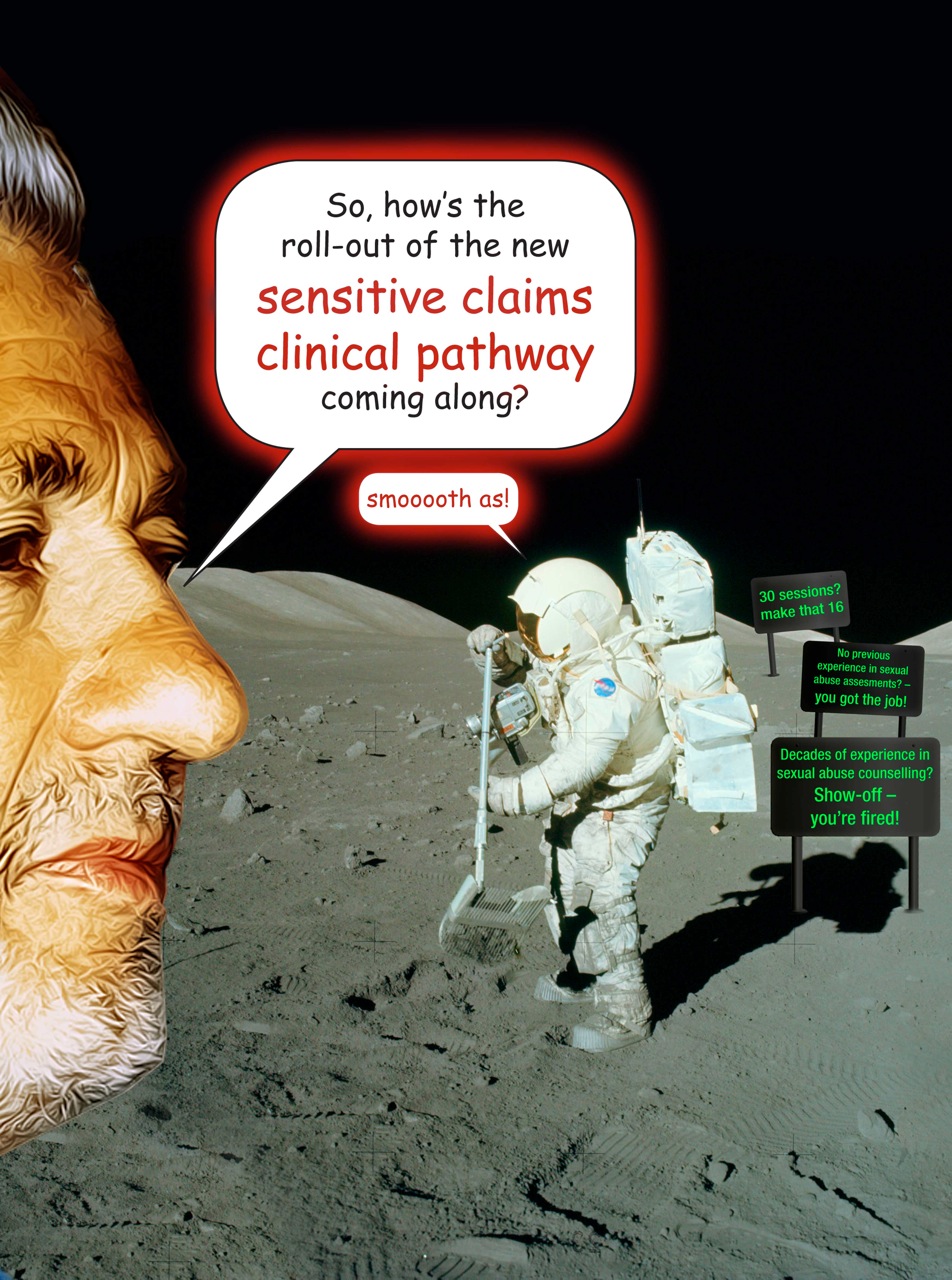
As 'Smooth' as the Surface of the Moon

Press release from NCWNZ
The last two weeks have seen the implementation of the new ACC clinical pathway for sensitive claims and the transition has been anything but ‘smooth’, says the National Council of Women of New Zealand (NCWNZ).
“Implementation was always going to be haphazard and risky,” says Elizabeth Bang, NCWNZ National President. “This is what happens when the service providers are ignored, and are expected to apply a diagnosis based on a system that few in New Zealand are qualified to administer.”
ACC implemented the new clinical pathway against a backdrop of professional dissension. Massey University, the authors of the research report used as the basis for the process change, has publicly removed itself from any responsibility for ACC’s decision-making, when it comes to the partial, fragmented implementation of the guidelines.
“The situation on the ground is best described as chaotic,” says Elizabeth Bang.
NCWNZ has to date heard that:
  • The severe workforce shortage of those eligible practitioners who can give a diagnosis using the DSM IV criteria is causing considerable delay and inappropriate and unethical assessment processes.
  • It appears that psychologists are being flown around the country to assess victims in their homes because they do not have premises in that location.
  • The use of assessors who have no history or training in sexual abuse.
  • Counsellors and therapists who are not currently eligible to give a diagnosis using DSM IV, are having to submit claims for clients which ACC will use for making referrals to the DSM IV qualified assessors. This significantly lengthens the process before a client knows if the claim will be accepted, and essentially captures the counsellors and therapists as “middle” women and men, rather than the previous position they held which ensured the claims could be approved in a more acceptable timeframe.
  • The benefit of counsellors and therapists being able to undertake assessments themselves meant they could also respond to the acute presenting need of the client for stabilisation, containment and risk assessment. This is now not being done before the very delayed assessment process.
  • ACC subsidises counsellors and therapists for a one hour session when preparing the ACC 45 claims, this includes the consultation time with the client. On average it is taking 90 minutes to prepare such material as the session notes, and all other relevant information to support the claims are included. The system places pressure on the provider to work without pay, to provide the fullest and best possible material to support the client within a specific time constraint. The client is caught having to discuss their traumatising event(s) in a manner that could be likened to a factory-line.
  • Previously, survivors who historically had an accepted claim, but at a later date presented for further help could do so to an ACC registered counsellor. A report would be generated following one ACC subsidised session. This system has now been removed; a survivor will need to meet the entire cost of the session, or a counsellor will have to go without payment for service. Only a letter of referral and supporting information can be submitted to justify why further treatment should be provided.
NCWNZ acknowledges that it is not unusual or uncommon for survivors to undergo more than one consolidated period of counselling or therapy. Often the survivor can only process so much change in their behaviour and lives that to push beyond that level could be less effective and too risky for the client. Also, life changing events such as parenthood, death of a loved one, economic downturn, such as a recession can trigger behaviour in a survivor that requires support, and from there an enhanced level of recovery can be achieved.
“Had the views of the sector been considered in the months and weeks leading up to the roll-out of the clinical pathway,” says Elizabeth Bang, “then ACC’s belated desire to talk would not appear so farcical. All believe that building upon the pathway following its implementation smacks of experimentation, with the victims of sex crimes being the guinea pigs.”
The adoption of the diagnostic tool has the effect of pitting one key section of the service provision, counsellors, social workers and therapists, against the other, clinical psychologists and psychiatrists.
As an educator and advocate for women, children and families, NCWNZ deplores the actions taken by ACC, and further notes the support of the Minister of ACC in this debacle.
“We will not keep these ongoing concerns and problems behind closed doors,” says Elizabeth Bang. “The public demands transparency.”
NCWNZ is awaiting a response from the Minister of ACC, Hon Nick Smith regarding its request that the review of the system be immediately undertaken and the implementation of the new scheme halted.
“We are hopeful that the Minister will respond favourably to our request. We are however prepared to escalate the issue, as simply from the user perspective alone, what has transpired is discriminatory,” concluded Elizabeth Bang.
http://www.scoop.co.nz/stories/PO0911/S00160.htm

24 August 2009

Open Letter to Nick Smith, Minister for ACC

A letter from the New Zealand Association of Psychotherapists

ACC Changes in Funding of Sexual Abuse Counselling

24 August 2009

Dear Minister, we speak for the members of the New Zealand Association of Psychotherapists as well as for other counsellors and therapists who have lent their support to presenting this document to you.
Over the last two weeks ACC has presented providers of sexual abuse counselling and psychotherapy services with imminent changes in delivery of sexual abuse counselling effective from 14 September 2009. These changes have been made without consultation with relevant professional bodies. Even groups that have been in dialogue with ACC about improving services (TOAH NNEST: Te Ohaakii a Hine-National Network Ending Sexual Violence Together, and SCAG: Sensitive Claims Advisory Group) have not been consulted.
The planned changes have sent shockwaves of disbelief through the counselling/therapeutic and survivor communities. The Minister for ACC will have been aware of these changes. We would like the opportunity to present a different point of view and have some vital questions answered.

Legacies Of Childhood Sexual Abuse (CSA)
Sexual abuse takes many forms, it can be a single episode involving someone who is ordinarily healthy and well functioning; it can be multiple episodes in the context of physical violence; it can take place in childhood over long periods and in single episodes. Our concern, in addressing the proposed ACC changes, is mainly with those who suffer most deeply from the experience of abuse, most especially those who have suffered abuse as children or from continued abuse as adults. This is not to minimise the effects of frequently highly traumatic events occurring to adults.
The sexual abuse of children causes the arrest or disruption of the development of the self leading to complex clinical presentation of impaired performance of ‘self-functions’ such as cognition, autonomy, selfresponsibility, emotional regulation, distress tolerance, identity, and social functioning (1) (2) (3) (4). For this reason the onset of abuse is significant (earlier onset leads to more severe problems) whereas people who are abused later in life show less severe problems. Survivors receiving counselling or therapy early in childhood show little or no disturbance later on. When CSA goes untreated survivors problems accumulate over the years leading to impairments in self-regulation, social functioning, occupational functioning, cognitive disturbances due to abuse-based beliefs, and shattering of internal psychological functioning. The cost of sexual abuse to the individual and to New Zealand society was estimated in 2001 to be $2,465m annually (5) and is probably higher for 2009.

ACC’s Responsibility For Victims Of Sexual Abuse
Independent of the question as to whether ACC is the best agency to provide services for survivors of sexual abuse, current regulation (IPRC 2001) demands that ACC “is to enhance the public good and reinforce the social contract represented by the first accident compensation scheme by providing for a fair and sustainable scheme for managing personal injury that has, as its overriding goals, minimising both the overall incidence of injury in the community, and the impact of injury on the community (including economic, social, and personal costs)”

Comment: Under the proposed changes ACC will not meet required responsibilities set out in the act! According to ACC 's injury statistics counselling/medical fees are about $2m for 2008 (6). The costs of financial entitlements such as Independence Allowance and Weekly Compensation raise the total claimantrelated costs to $19m. Costs for running the Sensitive Claims Unit alone are about $30m. It is clear that the costs of adMinistering the organisation exceed by far the services it is supposed to fund.

Question For The Minister: How does the Minister justify the expenditure of a system where the administration of services is 1 ½ times the cost of the service it administers; and where is the Minister’s commitment to improve funding for services and prune the top-heavy administration?

Comment: To make huge changes in the recovery pathways of mainly female victims of sexual abuse by relying only on one study which was funded by ACC is highly questionable. A study burdened with such funding bias can hardly be deemed trustworthy (7).

Comment: Studies conducted by world experts (1) (8) (2) (9) (10) (3) (11) as well as New Zealand research (12) have delivered evidence that the therapy relationship is the main factor behind positive outcomes. The provision and/or restoration of social support is a major buffer against the destructive force of stress and trauma. Social support and closeness with others helps survivors with the integration of difficult experiences and are vital for survivors’ recovery (3) (12) (13). “Emotional attachment is probably the primary protection against feelings of helplessness and meaninglessness; it is essential for biological survival in children, and without it, existential meaning is unthinkable in adults”(11).
Within the therapeutic relationship survivors’ recovery involves the (re)establishment of trust, development of self-confidence, development of social connections, meaning, hope, and self-agency. This will and always has taken time (2). These qualities can not be gained through a drug, a book, or in short term work of a few months. Recovery from sexual abuse can not be compared to a broken leg which heals by itself in 6 weeks. Recovery from sexual abuse takes place through caring and supportive interactions with others (2) (14) (12). However, these studies seem not to have been considered or given adequate weight.

Question For The Minister: How is the Minister going to convince the public and survivors of sexual abuse that he has considered a broad range of paradigms before he sanctions budget cuts that will impact detrimentally on CSA victims’ quality of life?

Much of the research that leads to a preference for short term intervention focuses on isolated symptoms i.e. depression without looking at underlying causes. This may work in controlled situations where study participants are carefully selected to meet well-defined inclusion and exclusion criteria; it is certainly not working for many survivors of CSA. That this paradigm is not working for survivors of CSA is shown in the public mental health system (32)(12). Between 50-80% of patients in psychiatric care have a history of sexual abuse that is not acknowledged and not considered in their treatment (15) (16) (17)(33). Public mental health treats symptoms e.g. depression with drugs and short term therapeutic input (if at all), a route ACC is now proposing. The ballooning costs for mental health show that this approach is not very effective. Instead patients are sentenced to a life of misery and poor social and occupational functioning. (12)

Comment: Up to this point ACC has failed to explain on what grounds the decision has been made to propose and then hurriedly push through a change in clinical pathway especially as ACC has not collected any outcome data regarding the quality of currently provided counselling services. (18)

Question For The Minister: What is the Minister’s basis for the assumptions that the current clinical pathway is not satisfactory?

Survivors of sexual abuse are marginalised in the following ways according to the statutes of the act:

1. establishing as a primary function of the Corporation the promotion of measures to reduce the incidence and severity of personal injury:

Comment: ACC has cut the funding for prevention education from $170,000 2006/2007 to $27,000 estimated for 2008/2009 (19).

Question For The Minister: How does the Minister explain these cuts given John Key’s speech (15) in April 2008 at the Sensible Sentencing Trust Victims Conference where he promised substantial increase of funds for victims of crimes? Are CSA survivors no longer considered victims of crime? How is the Minister going to justify the continuous victimisation of CSA survivors?

Comment: The new scheme requires vulnerable clients to visit three different therapists in the first five sessions. Research has shown that attending assessments and telling one’s sensitive and painful life story to a stranger is retraumatising (12).

Question For the Minister: How will the Minister guarantee that the process will not increase the severity of personal injury?

2. Providing for a framework for the collection, co-ordination, and analysis of injury-related information:

Comment: The client is required to reveal sensitive personal data to three different professionals in the first five sessions. Not only has research shown this to be re-traumatising (12), it also violates clients’ rights to privacy (Right 1 + 7 ACC Code of Claimants Rights) and the IPRC 2001 Act. Being granted a maximum of 16 hours (of which four will be for discussing progress reports) will effectively end the hope of recovery from CSA for many and will mean great struggle for survivors. This violates the IPRC 2001 Act that requires that the primary focus of ACC should be on rehabilitation to restore health, independence, and participation.
The assessor/provider split has been favoured by many managed care agencies overseas because it alleviates bureaucrats’ fear of assessment bias (therapists could over-diagnose to feather their own nest). Besides being insulting and causing significant interference with the therapeutic process (12) (20) (21) (22), assessor/provider split is not practical because the therapist responsible and liable for the outcome of treatment will need to make their own assessment and plan the treatment to work effectively.

Question For The Minister: How does the Minister envisage the clients being kept safe? Who should, according to the Minister, be liable and responsible for potential self-harm, suicide or psychiatric emergency, or any other form of harm that could befall the client?

3. ensuring that, where injuries occur, the Corporation's primary focus should be on rehabilitation with the goal of achieving an appropriate quality of life through the provision of entitlements that restores to the maximum practicable extent a claimant's health, independence, and participation:

Comment: Childhood sexual abuse (CSA) causes the arrest of self-development and interrupts healthy selffunctions leading to common symptoms such as mood disorders, anxiety disorders, or dissociative disorders (1). Ethical and professional practice has to address the cause of the symptoms to assure lasting improvement. A treatment protocol based on symptom reduction will not be able to rehabilitate clients with self-disturbances (1) (12) (3). Cancer is not treated with paracetamol, although it may help with the headaches.
Trauma specialists have conclusively demonstrated that persons abused in their childhood suffer complicated problems that often require long-term treatment (1) (19) (7) (3). About 90% of counselling for sexual abuse in New Zealand has been provided by counsellors and psychotherapists (18) in the last 20 years. They unanimously agree that it will be impossible for most survivors of CSA to complete their rehabilitation within 20 hours. They have delivered good and cheap services which in 2004/05 did not even come near $1m. (12) That deserves respect and not the patronizing restrictions imposed by ACC.

Question For The Minister: How does the Minister justify the marginalisation of two respectable professions who have done 90% of the CSA work in the last 20 years by refusing them their due recognition? How does the Minister justify that counsellors and psychotherapists are regulated by psychologists and psychiatrists, two professions who don’t even have sexual abuse training in their compulsory training curriculum and whose practical experience is limited to only 10% of the total ACC work? Furthermore, how will the Minister justify survivors of sexual abuse not being given the opportunity for recovery and thereby passing on the detrimental effects of trauma to their children?

4. ensuring positive claimant interactions with the Corporation through the development and operation of a Code of ACC Claimants' Rights:

Comment: According to the IPRC, Section 27, a mental injury means a clinically significant behavioural, cognitive, or psychological dysfunction. This is interpreted by ACC as “Mental injuries (as defined in Section 27 of the IPRC Act) must meet the criteria outlined in “The Diagnostic and Statistical Manual (DSM-IV™) of the American Psychiatric Association" in order to be eligible for ACC cover”.

Question For The Minister: Who authorised ACC to convert a clinically significant dysfunction into a DSM-IV diagnosis?

This effectively excludes survivors from accessing ACC funding for counselling who may have significant impairment in daily functioning yet not qualify for a DSM-IV diagnosis. Those who do fit DSM criteria will be disadvantaged and could be re-traumatised by seeing numerous health workers, being offered limited time with a counsellor, and then being referred on to public mental health services who even now don’t have the capacity to address CSA.
Receiving a diagnosis of mental illness is also problematic because it effectively shifts the responsibility for abuse away from the perpetrator (a crime was perpetrated causing a context specific response) towards the victim (she needs to see a shrink, she is crazy) (2). Failing to place psychiatric disturbances in the context of abuse is discounting the violation and injustice survivors have experienced (2) (20). Both the discounting and the pathologising of their trauma symptoms by attaching the label of mental illness is a withholding of survivors’ rights to have the injustice of the abuse recognised and to receive treatment that leads to recovery (12) (23).

Question For The Minister: How does the Minister justify that victims of sexual abuse are discriminated by being labelled mentally ill?

5. ensuring that persons who suffered personal injuries before the commencement of this Act continue to receive entitlements where appropriate.”

Comment: After 16 hours of therapy/counselling the client will be referred to public mental health service who don’t provide counselling, or to a psychologist for a maximum of 10 hours focused work. The new changes do not guarantee that clients will receive their due entitlements for recovery. Clients do not primarily seek financial compensation, they seek to be able to live a life worth living. The new scheme does not provide that opportunity.

Question For The Minister: How does the Minister plan to respond to victims of CSA who struggle to make ends meet financially, mentally, and emotionally knowing that he has sanctioned the cut of services of mainly female victims of crime while other sectors receive additional funding?

Conclusion
Counselling and psychotherapy have a long history of practice embedded in ethical values that include commitment to the physical and emotional well being of clients, their right to confidentiality, privacy, selfdetermination, and a secure therapeutic working relationship (NZAP, 1986). As Saakvitne and Abrahamson stated “The goal of psychotherapy is to understand the complex meaning of psychological and interpersonal events, largely through the creation of meaning in the therapeutic relationship” (24). In working with those suffering mental injury from sexual abuse, psychotherapists work towards repairing the internal sense of self and functioning that has been shattered by abusive experiences.
Research has repeatedly confirmed that 40% of positive outcome in therapy is due to client factors, 30% is due to the relationship between client and therapist, 15% is ascribed to the placebo effect, and only 15% of outcome is due to therapeutic modalities, and training (25) (26). It is nonsensical to construct a complete new approach to dealing with CSA around a questionable benefit of 15% given that meta-studies have proven that all therapeutic approaches are equally effective as long as therapist and client can establish a working therapeutic relationship.
Improvement would not come about by restricting hours that are clinically justified but by enabling a collaborative working environment in which the different services recognise each others qualities and support each other in the fight against sexual abuse and child abuse. It needs to be kept in mind that counselling is not the big expense in the ACC Sensitive Claims Unit. Instead, the surveillance mechanisms put in place give very much the impression of paranoia that led to millions being spent to save $500,000. This does not make good business sense and would probably be impossible in the private corporate world.
Rather than setting up a complicated system of separate people doing assessment, treatment, and review of treatment those counsellors who do not already use assessment and diagnostic tools could be encouraged and taught to do so. Many psychotherapists who currently provide services to Sensitive Claims Unit are practiced in assessment and treatment planning.
Our concern is for the well-being of those who have been victims of abuse, as children and as adults. Counsellors and psychotherapists may feel some financial effect with the new regulations, but they will be able to compensate for any income losses they may suffer. The tragedy is that clients do not have that luxury. Unless they can afford to pay privately for their counselling, they will be marginalised being bereft of recovery from sexual abuse and the attainment of quality of life, something the Minister and many others who will read this paper take for granted.
It is not enough for the society to be horrified at the number of children who get abused and killed in this country. Society needs to set aside funds to help victims of sexual abuse to rehabilitate so they can provide for their children and grandchildren and break the hideous cycle of abuse.
We, the undersigned, request on behalf of the organisation we represent that the Minister halts the implementation of the proposed changes and meets with CSA survivors and with the representatives of those who have worked at the coal face of sexual abuse recovery to hear our views, to increase his understanding of the complexity of the problem, and to support policies that reflect the social responsibilities the government has towards victims of childhood sexual abuse.

Eileen Birch (President NZAP)
Susan Hawthorne (NZAP SCAG representative)
Dr Gudrun Frerichs
Miriam van Dingenen
Sean Manning
Ondra Williams
Lesley King
Suzanne Johnson (Chair of Public Issues NZAP Council)

Bibliography
1. Briere, J. Treating adult survivors of severe childhood abuse and neglect: Further development of an integrative model. In J. E. B. Myers, L. Berliner, J. Briere, C. T. Hendrix, T. Reid & C. Jenny (Eds.), The APSAC handbook on child maltreatment . 2002.
2. Cozolino, L. J. The Neuroscience of Psychotherapy: Building and Rebuilding the Human Brain. Norton : s.n., NY.
3. Herman, J. Trauma and recovery: From domestic abuse to political terror. London : Harper Collins, 1992.
4. The body keeps the score: Memory and the evolving psychobiology of post-traumatic stress. Kolk, v. d. B. A. s.l. : Harvard Rev Psychiatry, 1994, Vol. 1. 253-265.
5. Julich, S. Breaking the Silence: Restorative Justice and Child Sexual Abuse. Auckland : Unpublished PhD Thesis, Massey University, 2001.
6. ACC. ACC Statistics. ACC. [Online] 2009. [Cited: August 20, 2009.] http://www.acc.co.nz/about-acc/statistics/accinjury-statistics-2008/13-sensitive-claims/IS0800236.
7. Rigor in qualitative research: The assessment of trustworthiness. Krefting, L. s.l. : The American Journal of Occupational Therapy, 1991, Vol. 45. 214-222.
8. Cloitre, M., Cohen, L. R., & Koenen, K. C. Treating survivors of childhood abuse: psychotherapy for the interrupted life. NY : Guilford Press, 2006.
9. Courtois, C. A. Recollections of Sexual Abuse: Treatment Principles and Guidelines. NY : Norton, 1999.
10. Experiences of women healing from childhood sexual abuse. Glaister, J. A., & Abel, E. 4, s.l. : Arch Psychiatr Nurs, 2001, Vol. 15. 188-164.
11. Kolk, v. d. B. A., McFarlane, A. C., & Hart, v. d. O. A general approach to treatment of Post Traumatic Stress Disorder. [book auth.] A. C. McFarlane & L. Weisaeth (Eds.) v. d. B. A. Kolk. Traumatic Stress. NY : Guilford Press, 1996.
12. Frerichs, G. Balancing Recognition and Disrespect: Recovery as a Process of Identity Formation: A New Zealand Study How Services Shape Recovery From Sexual Abuse. Auckland : AUT, 2008.
13. Social Support and Coping Strategies as Mediators of Adult Adjustment Following Childhood Maltreatment. Runtz, M. G., & Schallow, J. R. 2, s.l. : Child Abuse and Neglect, 1997, Vol. 21.
14. The psychotherapeutic needs of women who have been sexually assaulted. Draucker, C. B. 1, s.l. : Perspect Psychiatr Care,, 1999, Vol. 35. 18-28.
15. Child Abuse and Severity of Disturbance Among Adult Psychiatric Inpatients. Read, J. 5, s.l. : Child Abuse and Neglect, 1998, Vol. 22.
16. Staff responses to Abuse Histories of Psychiatric Inpatients. Read, J., & Fraser, A. 2, s.l. : Australian and New Zealand Journal of Psychiatry, 1998, Vol. 32.
17. Trauma History Screening in a Community mental health Center. Cusack, K. J., Frueh, B. C., & Brady, K. T. 2, s.l. : Psychiatric Services, 2004, Vol. 55. 157-162.
18. Sexual abuse counselling: Treatment rates provided by psychiatrists, psychologists and counsellors under ACC funding. Goodyear-Smith, F., Lobb, B., & Mansell, J. 6, s.l. : NZFP, 2005, Vol. 32. 389-93.
19. Access support services . Access support services . [Online] July 2009. http://www.accesssupport.co.nz/issues.html.
20. Provision of psychotherapy under managed health care: A growing crisis and national nightmare. Karon, B. P. 1, s.l. : Professional Psychology: Research and Practice, 1995, Vol. 26. 5-9.
21. Contemporary ethical dilemmas in psychotherapy: Cosmetic psychopharmacology and managed care. Sperry, L. 1, s.l. : American Journal of Psychotherapy, 1999, Vol. 52. 7
22. The Traumatic Bond Between the Psychotherapist and Managed Care. Weisgerber, K. Northvale, NJ : Jason Aronson Inc, 1999.
23. Sidanius, J., & Pratto, F. Social Dominance: An Intergroup Theory of Social Hierarchy and Oppression. Cambridge : University Press, 1999.
24. The impact of managed care on the therapeutic relationship. Saakvitne, K. W., & Abrahamson, D. J. s.l. : Psychoanalysis and Psychotherapy, 1994, Vol. 11.
25. Lambert, M. J. Psychotherapy outcome research: Implications for integrative and eclectic therapists. [book auth.] J. C. Norcross & M. R. Goldfried (Eds.). Handbook of psychotherapy integration. NY : Basic Books, 1992.
26. Toward an outcome-informed therapeutic practice. Miller, S., Duncan, B., Johnson, L., & Hubble, M. A. J. 2, s.l. : Psychotherapy in Australia, 2000, Vol. 6. 30-36.
27. Schore, A. Affect Dysregulation & Disorders of the Self. NY : Norton, 2003.
28. Dissociation, somatization, and affect dysregulation: the complexity of adaptation of trauma. Kolk, v. d. B. A., Pelcovitz, D., Roth, S., Mandel, F. S., McFarlane, A., & Herman, J. L. 7, s.l. : Am J Psychiatry, 1996, Vol. 153. 83-93.
29. Crampton, D. ACC case manager and assessor collude prior to assessment to save money. http://www.scoop.co.nz/ archive/scoop/stories/df/75/200302180838.a99a52e3.html. Wellington : Scoop, 2003.
30. The History of Child Abuse. DeMause, L. 3, s.l. : Journal of Psychohistory, 1998, Vol. 25.
31. Form of Social Support That Moderate PTSD in Childhood Sexual Abuse Survivors. Hyman, S. M., Gold, S. N., & Cott, M. A. 5, s.l. : Journal of Family Violence, 2003, Vol. 18. 295-300.
32. On being invisible in the mental health system. Jennings, A. 4, s.l. : J Ment Health Adm, 1994, Vol. 21. 374-87.
33. Asking About Abuse During Mental Health Assessments: Clients' Views and Experiences. Lothian, J., & Read, J. 2, s.l. : New Zealand Journal of Psychology, 2002, Vol. 31. 98-103.
34. The long-term impact of the physical, emotional, and sexual abuse of children: a community study. Mullen, P. E., Martin, J. L., & Anderson, J. C. 1, s.l. : Child Abuse and Neglect, 1996, Vol. 20. 7-21.
35. Childhood Trauma, the neurobiology of adaptation and use-dependent development of the brain. How states become traits. Perry, Pollard, Blakely, Baker, & Vigilante. 271-291, s.l. : Infant Mental Health Journal, 1995, Vol. 16.
36. Siegel, D. J. The Developing Mind: How relationships and the brain interact to shape who we are. NY : Guilford, 1999.
37. The Great Psychotherapy Debate: Models, Methods, and Findings. Wampold, B. E. NJ : Erlbaum, 2001.
38. John Key, Speech to the Sensible Sentencing Trust, April 2008. National Party. National Party. [Online] http://www.national.org.nz/Article.aspx?ArticleId=12125.
http://www.ncwnz.org.nz/assets/Action/Letter-To-The-Minister-Of-ACC.pdf

12 July 2009

Discrimination against Maori women

Press release from NCWNZ
More information about the ACC Sensitive Claims clinical pathway is coming to light, says the National Council of Women of New Zealand (NCWNZ); this information suggests not only discrimination on the basis of gender, but also on race.
According to ACC, Maori are more likely to be a client for ACC subsidised counselling. Women over all make up 82% of the claimants; and while it is known that Maori women are heavily represented in this percentage, ACC is currently unable to confirm what the actual ethnicity breakdown is.
“The SC clinical pathway was implemented in advance of ACC establishing what, or which kaupapa Maori treatment plans will be utilised,” said Elizabeth Bang, NCW National President. “Best practise would have set Maori women’s treatment needs as the first priority, given they are the majority population at risk.”
Hui that have been promised by ACC and the Minister of ACC to resolve this highly significant problem have been cancelled. It is not clear whether future Hui will include Maori providers and their representatives working at the coal-face, being invited to the consultation table.
“Some Maori counsellors are feeling particularly frustrated, as they have young Maori women arriving at their doors, wanting to access ACC subsidised counselling; but no guarantees can be made to these young women that the counsellor sitting opposite them will be on the ACC recommended treatment providers list,” says Elizabeth Bang. “These women are leaving in tears. The Maori providers have tried to open the lines of communication with both the Minister’s office and ACC, but no progress eventuates.”
The SC clinical pathway breaches the United Nations’ Convention on the Elimination of All Forms of Racial Discrimination:
Article 1 of the Convention defines "racial discrimination" as any distinction, exclusion, restriction or preference based on race, colour, descent, or national or ethnic origin which has the purpose or effect of nullifying or impairing the recognition, enjoyment or exercise, on an equal footing, of human rights and fundamental freedoms in the political, economic, social, cultural or any other field of public life.
Whether a particular action or policy discriminates is judged by its effects.
In seeking to determine whether an action has an effect contrary to the Convention, it will look to see whether that action has an unjustifiable disparate impact upon a group distinguished by race, colour, descent, or national or ethnic origin.
“Since Maori women are more likely to be affected by the changes to ACC, why are they the last to be consulted” questions Elizabeth Bang.
Information received from ACC suggests that they have now identified areas of importance where ACC will further develop advice or parts of the pathway. These include assessment of children and adolescents, counselling using kaupapa Maori models, clients in prison, clients who have alcohol and other drug dependencies, clients with intellectual disability.
“This ship is already sailing and we have no idea have ACC is currently processing claims from Maori women. Are they being held on to till ACC makes a decision on kaupapa Maori models, and when exactly will that be happening?” concluded Elizabeth Bang.
http://www.scoop.co.nz/stories/PO0912/S00091.htm

11 July 2009

Revving it up for sensitive claims

Press release from NCWNZ
The National Council of Women of New Zealand (NCWNZ) is heartened by the support being offered by some members of the motorcycling community who are likewise opposed to the insensitive changes to the ACC clinical pathway for female and male victims of sex crimes.
“We have been receiving feedback from supporters, such as ‘most decent human beings cringe at this and fully support your cause’ and, ‘any cost savings should not target these vulnerable victims, levies on sex offenders would be far preferable’. This demonstrates to us that this issue is by no means bound by one sector,” says Elizabeth Bang, NCWNZ National President, “rather, it grates at the core for a diverse range of people.”
The National Council of Women is also listening to the position taken by the motorcyclists.
“It is pretty clear cut to us that Government cannot impose increased levies and take away the rights of the motorcycling community,” says Elizabeth Bang. “The moves against them are discriminatory and by all accounts not justified statistically.”
The Injury Prevention, Rehabilitation and Compensation Amendment Bill, which is currently before the Select committee, if signed off on, will unfairly exploit the community.
NCWNZ believes that the changes to ACC are in conflict with the governments obligations under CEDAW (Convention of the Elimination of All Forms of Discrimination Against Women). Women who are seeking ACC subsidised counselling for experiencing trauma as a result of a sex crime are being discriminated against through policy that removes access to appropriate assessment and treatment.
“When considering the IPRC Amendment Bill, the scenario is one of ‘damned if you do’ and even ‘more damned if you don’t’,” says Elizabeth Bang. “The proposed increases in levies for employers, employees and car owners will be significantly and substantially increased if this legislation does not get accepted by Parliament.”
NCWNZ believes that the community is increasingly concerned that the political agenda is manoeuvring ACC to become a more saleable commodity. For the last 23 years, NCWNZ has been in opposition to the privatisation of publicly-owned assets; to date this has included the postal system, the roading system, energy and water systems.
“Groups such as the motorcyclists, the National Foundation for the Deaf, the Mental Health Foundation, NZ Association of Counsellors, ACC Coalition and many others are all voicing their concerns. But through this diversity of interests, all share one mutual concern, ACC,” concluded Elizabeth Bang.
http://www.scoop.co.nz/stories/PO0911/S00220.htm